
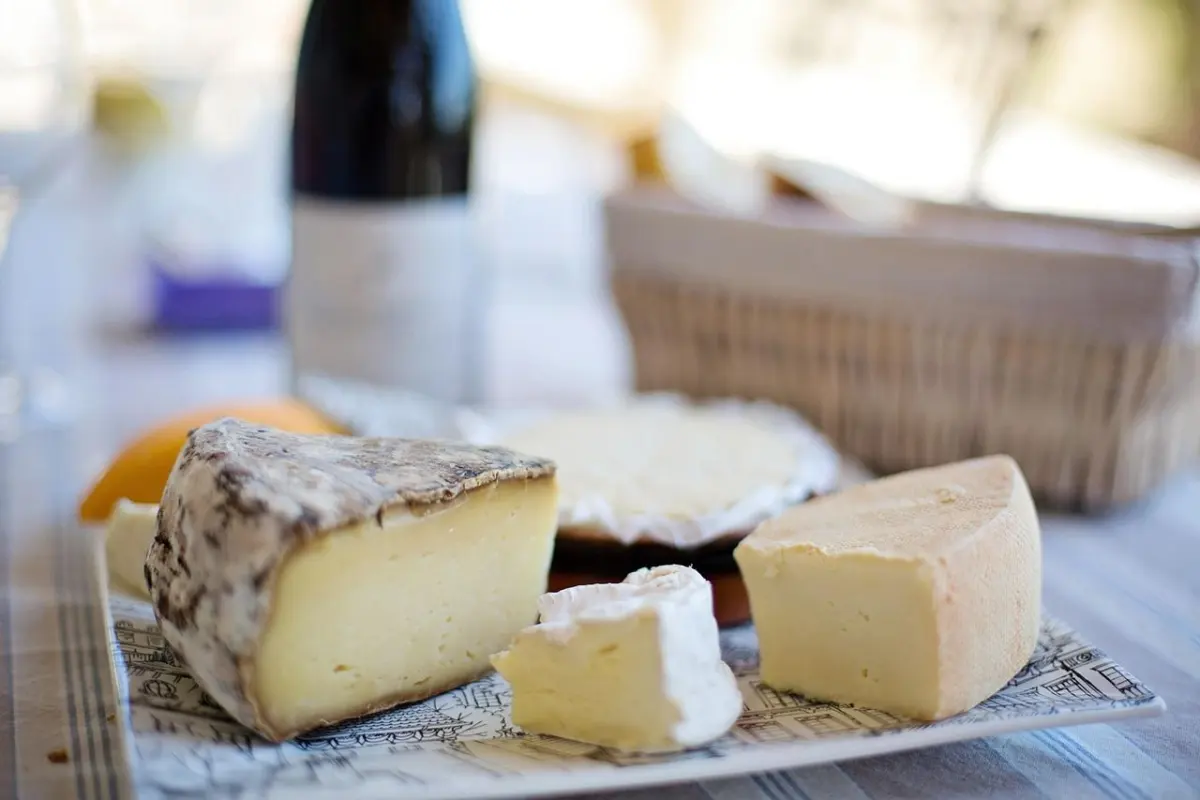
Staring at a cheese counter and a wine shelf, unsure what goes together? For wine and cheese pairing, match weight with weight: light wines with fresh cheeses, bold reds with aged ones, and sweet wines with blue cheese.
If you are planning the rest of the evening too, these cocktail party ideas are a good place to start.
| Item | Value |
|---|---|
| Rest time for cheese before serving | At least 30 minutes at room temperature |
| Pairings to serve at one gathering | Three to five |
| Comté age that suits red wine | 16-month |
| Comté age that suits white wine | Eight-month |
| Types of cheese in the world | More than 1,800 |
These figures come from a Kendall-Jackson guide from June 2025 and an Irish Times column from August 2026. Figures can change, so check the source before you rely on them.
The basic rules behind a good pairing
A good pairing leaves both the wine and the cheese tasting better. Bonterra’s pairing guide says the usual rules for food and wine also work for cheese, and it names texture, richness, acidity, flavor and intensity as the things to weigh.
Here is how those ideas play out in practice:
- Match or contrast. Kendall-Jackson pairs a rich triple-cream cheese with a creamy, buttery Chardonnay (a match), and a sweet Riesling with salty blue cheese (a contrast).
- Texture. Light, soft cheeses such as ricotta or goat cheese suit delicate wines like Sauvignon Blanc. Hard, aged cheeses such as aged Cheddar or Parmesan suit bold, full-bodied reds like Cabernet Sauvignon, according to the same guide.
- Acidity. Bonterra says the wine needs at least as much acidity as the food in a successful pairing.
- Intensity. Delicate cheeses such as burrata are best with lighter wines like Pinot Gris or a rosé, per Kendall-Jackson.
A cheese consultant quoted by Halliday Wine Companion boils it down to three ways of matching: cut through the flavours, complement them or contrast them. If a pairing is not working, ask which of those three you were aiming for.
Matching wine to each cheese family
Sorting cheeses into families is the quickest way to narrow the wine. Use these as starting points, then follow your own taste.
- Fresh cheeses. Young fresh cheeses such as mozzarella and fresh goat’s cheese are best with a white such as sauvignon blanc, Riesling or Loire Chenin Blanc, says the Irish Times column. Halliday also calls sauvignon blanc a classic partner for goat’s cheese.
- Bloomy and washed rind cheeses. The Irish Times column says pungent cheeses such as Brie, Camembert and Livarot are best with powerful white wines or red wines with no tannins. Millesima suggests a dry, traditional-method sparkling wine, such as a Brut Champagne or Cava, for Brie.
- Firm and aged cheeses. Parmesan, Comté, Gouda, Cheddar and Manchego go well with red wines, even tannic ones, and also with textured whites such as chardonnay, according to the Irish Times column.
- Blue cheeses. The same column points to sweet wines, amontillado sherry, and tawny or vintage port. Millesima pairs Roquefort with a sweet Sauternes or Barsac, and Stilton with a fortified wine such as Port.
Blue cheese is the one family where a dry wine often fails. Bonterra explains that the molds in blue cheese destroy the sweet fruit flavors in a dry wine, leaving it unbalanced, sour and bitter, so a dessert wine is the best choice.

Comté is the friendliest cheese on the board. The Irish Times columnist has the older 16-month Comté with red wine and the lighter, fruitier eight-month cheese with white, though both go well with pretty much any wine, including Champagne.
Should you serve red or white with cheese?
Many people assume cheese means red wine, but the sources disagree with that habit. The Irish Times says most cheeses go better with white wine than with red.
One reason is tannin. A sommelier quoted by Millesima says the proteins in cheese can intensify the tannins in red wine, which can lead to clashing flavors.
Red still has its place. Kendall-Jackson says a tannic wine loves protein and fat, which makes it a good match for aged and firm cheeses. For milder cheeses, Millesima suggests light-bodied, low-tannin reds such as Gamay or Pinot Noir, and Halliday notes you can even try Pinot Noir with Brie.
Oak matters as well. Bonterra warns that extremely oaky wines are tough to enjoy with cheese because the buttery notes overpower everything else. A Chardonnay with balanced oak, by contrast, offers rich, creamy flavors that suit creamy cheeses such as Brie, Munster and Camembert.
For hard aged cheeses, the same guide favors structured reds, because their tannins can grip and manage the rich, salty intensity. That fits the Cabernet Sauvignon and aged Cheddar match described earlier. Use the age of the cheese as your first clue: the older and harder it is, the more structure the wine needs.
A safe choice for a mixed board
Most boards hold several cheeses, so one wine has to do a lot of work. For that situation the Irish Times columnist names these near fail-safe options:
- A rich white chardonnay.
- A light red Beaujolais.
- A glass of Port.
Kendall-Jackson adds that when in doubt, sparkling wine is a foolproof choice. The Irish Times column also reminds you that beer and cider go very well with cheese.
Serving wine and cheese at a gathering
Good choices can be undone by poor serving. Follow these steps to keep each pairing in focus, drawing on Kendall-Jackson’s tips:
- Keep it small. Limit yourself to three to five pairings so that each one gets attention.
- Warm the cheese. Let it sit at room temperature for at least 30 minutes before serving so the flavor and aroma can show.
- Go light to bold. Begin with lighter wines and delicate cheeses, then move on to aged cheeses with more robust wines.
- Taste together. Take a bite of cheese and follow it with a sip of wine to notice how they interact.
The same guide offers a shortcut when you are stuck: what grows together goes together. Think French Brie with Burgundy Pinot Noir, or Italian Pecorino with Chianti.
Once the wines are chosen, these charcuterie board ideas can help you fill out the plate. If the cheese course is part of a bigger meal, read about how to host a dinner party to plan the rest of the evening.
Frequently asked questions
What is the safest wine for a mixed cheese board?
Show answer
The Irish Times columnist names a rich white chardonnay, a light red Beaujolais or a glass of Port as near fail-safe options. Kendall-Jackson also calls sparkling wine a foolproof pairing.
What wine goes with blue cheese?
Show answer
Choose something sweet. Bonterra recommends a dessert wine, and the Irish Times column lists sweet wines, amontillado sherry, and tawny or vintage port.
How long should cheese sit out before serving?
Show answer
Kendall-Jackson advises letting cheese rest at room temperature for at least 30 minutes so it can show its full flavor and aroma.
Does red wine always go with cheese?
Show answer
No. The Irish Times says most cheeses go better with white wine than red, although firm, aged cheeses do well with red wines.