Planning a board that looks generous without hours of fuss? You’ll get the best results from these charcuterie board ideas: variety, colour and small, refreshed portions. Keep perishables cold until guests arrive.
Planning a wider gathering? Our guide to cocktail party ideas covers the rest of the evening.
| Item | Value |
|---|---|
| Cut produce and cheeses at room temperature | 2 hours total |
| Same items when the room is above 90 °F | 1 hour |
| Replacing dips and condiments | At least every 2 hours |
| Cut melons, tomatoes and leafy greens (NC State Extension guidance) | No more than 4 hours |
| Bleach sanitiser for cutting boards | 1 tablespoon unscented liquid chlorine bleach per gallon of water |
These figures come from the University of Nebraska-Lincoln food safety guide, peer-reviewed in 2022, and a June 2022 N.C. Cooperative Extension article. Food safety guidance can change, so check the sources before you rely on them.
What goes on a charcuterie board?
The University of Nebraska-Lincoln describes a charcuterie board as an assortment of meats, cheeses, nuts, breads, olives, fruits, dips and spreads arranged on a cutting board or tray. That is a flexible definition, and it leaves plenty of room for your own taste.
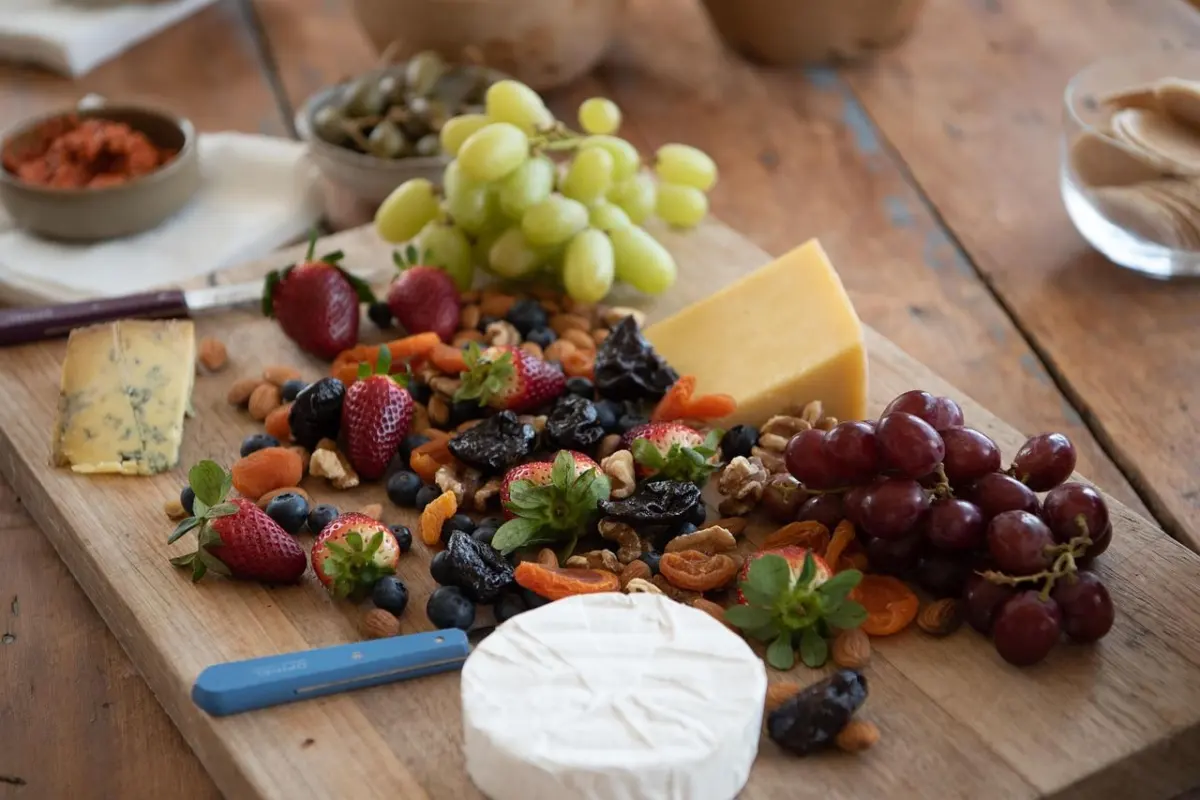
Strictly speaking, the word charcuterie traditionally refers to cured meats such as sausages, dried meats and salami-type foods, as N.C. Cooperative Extension notes in its June 2022 article. Many home boards are closer to graze boards, where vegetables, fresh and dried fruits, cheeses, dips, hummus and honey are frequently found.
Think in categories rather than a fixed shopping list. A good starting mix draws from each of these:
- Meats: sausages, dried meats or salami-type foods
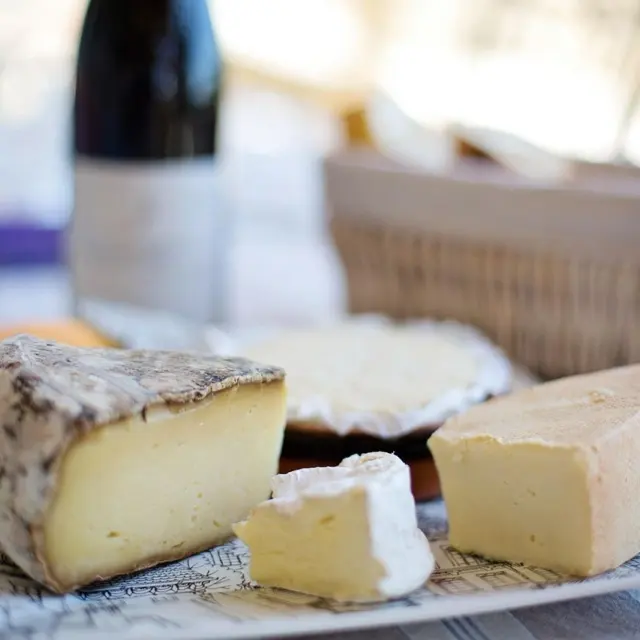
- Cheeses: a mix of hard, semi-hard and soft
- Crunch: crackers, breads and nuts
- Fresh and briny: fruit, vegetables and olives
- Dips and sweet touches: spreads, hummus, honey or dark chocolate
Charcuterie board ideas for a layout that looks great
NC State’s extension team puts it simply: people eat with their eyes. A board looks generous when it has contrast in colour, shape and texture, and when no patch of bare wood is left unplanned.
Work in layers so the board comes together quickly:
- Start with clean hands, surfaces and boards, platters or trays.
- Set small bowls on first for dips and anything with liquid, so nothing leaks across the board.
- Add the cheeses, spacing different shapes and colours apart.
- Fold or fan the meats beside the cheeses.
- Fill gaps with crackers, nuts, fruit and vegetables, tucking the brightest colours between the paler ones.
- Give every serving dish its own utensil, such as a spoon, tongs or toothpicks.
The University of Nebraska-Lincoln notes that charcuterie meats and cheeses have the most flavor at room temperature. Keep them chilled until close to serving, then let the board settle briefly while you finish setting up, remembering the time limits further down.
A smart habit is to plate only part of what you bought. Keep a small reserve of sliced meats and cheeses in the refrigerator, ready for restocking when the board looks sparse.
Ideas for kids, allergies and lighter boards
A board does not have to be heavy. N.C. Cooperative Extension describes a kid-friendly board made with sunflower seeds, whole wheat crackers, reduced-sodium turkey, cheese cubes, homemade ranch dip, red pepper hummus, dark chocolate, turkey pepperoni, bell peppers, carrots, grape tomatoes and cucumbers.
If you would rather serve individual portions, the University of Nebraska-Lincoln suggests building a charcuterie board in a jelly jar or other small container. This also keeps fingers out of shared food.
Think about allergies before you build. Cross contact is hard to avoid on a shared board, so the extension article suggests offering a known allergen in a separate bowl or tray so it does not touch the other foods.
What to serve alongside the board
Cheese-forward boards invite a glass in hand, and our guide to wine and cheese pairing can help you decide what to pour.
If you want something lighter and fizzier, these spritz recipes are an easy place to start. Either way, a few napkins and small plates keep guests comfortable while they graze.
How do you keep a board safe to eat?
The University of Nebraska-Lincoln says cut produce and cheeses should be refrigerated until served and not kept at room temperature for more than 2 hours total, or 1 hour if the temperature is above 90 °F. Its guide, peer-reviewed in 2022, also advises replacing dips and condiments at least every two hours and washing the containers between uses. You can read it on the university’s food safety page.
The June 2022 article from N.C. Cooperative Extension gives a longer window of four hours for cut melons, tomatoes and leafy greens, and for soft cheese or refrigerated meats. When two sources differ, the shorter window is the cautious choice.
The same article says crackers and breads, dried fruit and nuts, honey, shelf-stable cured meat and hard or semi-hard cheeses can be left out. That makes them good anchors for a board that will sit for a while.
A few habits help every time:
- Wash produce and fresh herbs before using them.
- Consider gloves while you assemble the board.
- Plate small amounts and add more during the event.
- Use clean bowls and fresh condiments when you replace dips, rather than topping up the old ones.
- Offer tongs, little forks or toothpicks so guests do not use their fingers.
Choosing and cleaning the board itself
The University of Nebraska-Lincoln suggests a designated cutting board for charcuterie, not one you use to cut raw protein foods. It also says boards that become excessively worn or develop hard-to-clean grooves should be discarded.
To clean one, the guide cites the USDA’s advice to wash boards with hot, soapy water after each use. Nonporous acrylic, plastic or glass boards and solid wood boards can go in the dishwasher, but laminated boards may crack and split.
For extra sanitising, both wooden and plastic boards can be treated with a solution of 1 tablespoon of unscented liquid chlorine bleach per gallon of water. Bamboo boards are harder and less porous than hardwoods, according to the same page.
Frequently asked questions
How long can a charcuterie board sit out?
Show answer
The University of Nebraska-Lincoln guide says no more than 2 hours total for cut produce and cheeses, or 1 hour if it is above 90 °F. Leftovers from a board that has been set out and used should be refrigerated or thrown away.
Does a charcuterie board need meat?
Show answer
No. N.C. Cooperative Extension notes that graze boards can showcase healthier options, with vegetables, fruits, cheeses, dips, hummus and honey in place of or beside cured meats. See its June 2022 article for examples.
How do I stop guests touching everything?
Show answer
Put out a separate utensil for every dish. The University of Nebraska-Lincoln says this keeps guests from contaminating the entire board, and N.C. Cooperative Extension adds that small forks or toothpicks encourage people not to use their fingers.
Can I use a wooden board?
Show answer
Yes, as long as it is clean and in good shape. The Nebraska guide says wooden and plastic boards can both be sanitised with a bleach solution, and worn boards should be discarded.