

Worried you’ll be stuck in the kitchen all night? Here’s how to host a dinner party calmly: pick a make-ahead menu, set the table early, and keep food at safe temperatures.
If you’re planning something looser than a seated dinner, browse these cocktail party ideas for a lighter format.
| Item | Value |
|---|---|
| Refrigerate perishable food within | Two hours (one hour above 90°F) |
| Bacteria “Danger Zone” | 40°F to 140°F |
| Poultry final internal temperature | 165°F |
| Steaks, chops and roasts (beef, pork, lamb, veal) | 145°F, then rest at least three minutes |
| Ground meats | 160°F |
| Refrigerated leftovers stay safe | Three to four days |
These figures come from USDA guidance as relayed by UConn Today in November 2023 and Food Safety News in November 2025. Guidance can change, so check the sources before you rely on the figures.
Start with a menu you can mostly make ahead
The calmest hosts rely on make-ahead dishes for most of the menu. Choose food that finishes without you, so you can spend the evening at the table instead of at the stove.
- Starter: a board, a chilled soup or a salad you dress at the last minute.
- Main: a braise, a roast or a baked dish that holds well in the oven.
- Sides: vegetables and grains that taste good warm rather than scalding.
- Dessert: a tart, poached fruit or anything you can finish the day before.
For a starter that needs no cooking, read up on wine and cheese pairing and let a good board do the work.
Ask guests about allergies and dislikes when you invite them, not on the night. Also think about raw eggs in dessert: the Illinois Department of Public Health says foods such as egg drinks, mousse and bread pudding should be avoided when made with raw eggs, unless they use pasteurized eggs or an egg substitute.
How do you set the table and the bar before guests arrive?
Do everything that doesn’t involve heat the day before. Lay the table, put out plates and glasses, and set out serving dishes with their spoons already in place.
Think about flow as well as looks. Keep a clear path from kitchen to table, give the drinks their own spot so guests can help themselves, and choose music you can talk over. If you want a proper drinks station, the guide on how to stock a home bar shows what to keep on hand.
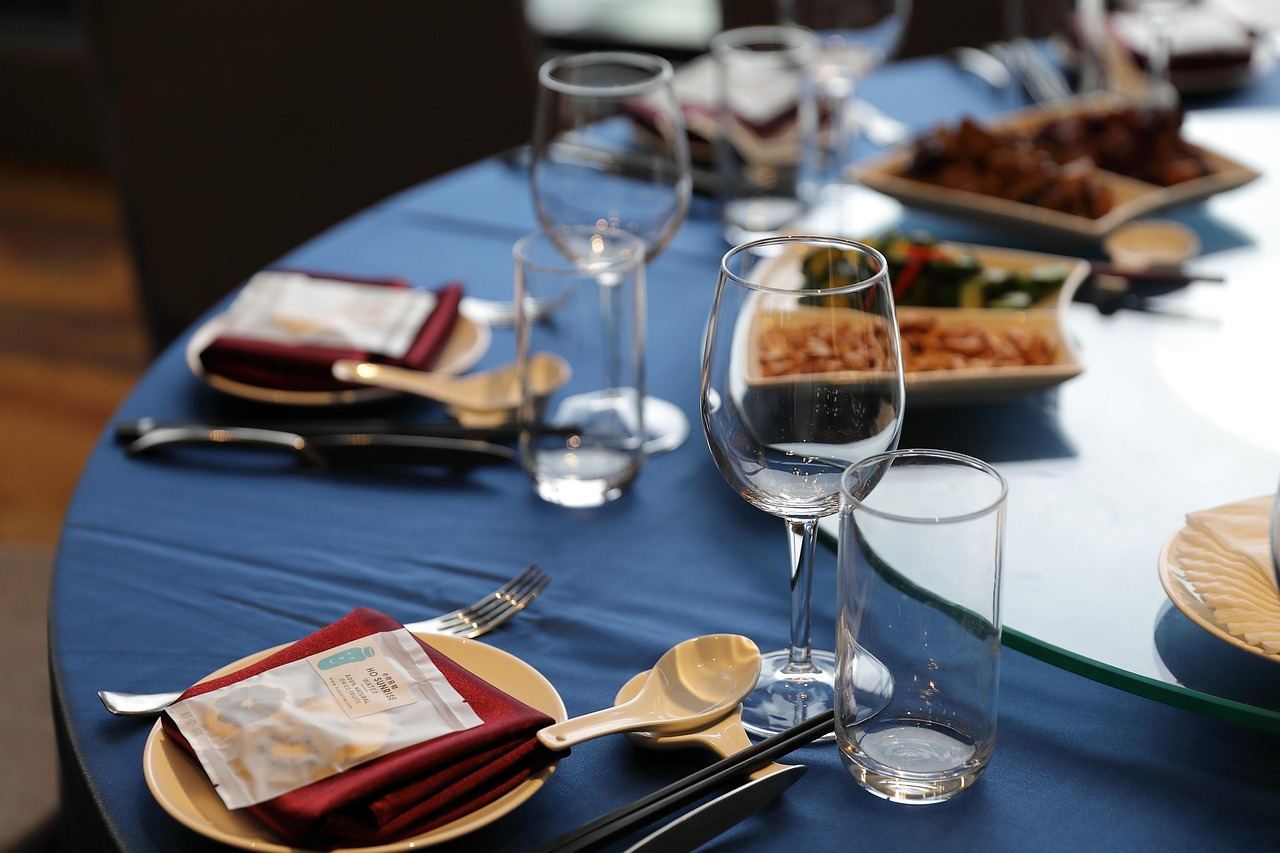
Finally, tidy the room where guests will gather and keep the kitchen counters clear. A clear workspace makes it easier to plate food quickly and to keep raw and cooked items apart.
Keep food safe from prep to plating
Food safety is the part of hosting nobody notices, until it goes wrong. Start with clean hands: UConn Today, relaying USDA guidance in November 2023, advises washing with soap and water for at least 20 seconds before preparing food, after handling raw meat and before serving.
Next, prevent cross-contamination. Use separate cutting boards, one for raw meat and poultry and another for fruits and vegetables, and don’t rinse raw poultry, because that can splash bacteria around the kitchen. The Illinois Department of Public Health also notes that sponges harbor bacteria, so limit their use in the kitchen.
Cook with a thermometer, because the Illinois Department of Public Health says you cannot tell by color and texture alone whether food is fully cooked. These targets come from the UConn Today article:
- Poultry: a final internal temperature of 165°F.
- Beef, pork, lamb and veal steaks, chops and roasts: at least 145°F, then rest the meat for at least three minutes before carving.
- Ground beef, pork, lamb and veal: 160°F.
Once food is cooked, the aim is to avoid the Danger Zone. UConn Today describes it as 40°F to 140°F, where bacteria multiply quickly, and says cooked hot food should stay at 140°F or warmer. Perishable food should go back in the refrigerator within two hours, or one hour if the air is above 90°F.
If a guest brings a cold dish, the same article suggests a cooler with ice or gel packs to keep it at or below 40°F.
Run the evening like a calm host
A simple running order keeps you from improvising when guests are already at the door. Adjust the steps to suit your menu.
- The day before: shop, set the table, make dessert and prepare anything that improves with time.
- Morning of: chill drinks, wash and chop vegetables, and clear fridge space for dishes waiting to go in the oven.
- Shortly before guests arrive: start the main, light the candles and put the starter on the table.
- At the door: hand every guest a drink straight away so they settle in while you finish.
- At the table: serve the main while it’s hot, and let guests pass sides around so you can sit down.
- After dinner: put perishable food away before you pour coffee, rather than leaving it out all evening.
Don’t aim for perfect. Guests remember a relaxed host and good conversation far longer than a flawless garnish.
What should you do with leftovers?
The cardinal rule is to store leftovers properly within two hours of cooking, according to Food Safety News in November 2025. It adds that the window shrinks to one hour in an environment above 90°F, such as a hot kitchen.
Divide leftovers into small, shallow containers so they cool faster. Food doesn’t need to reach room temperature first: Food Safety News reports a USDA study in which 76 percent of participants wrongly believed they should wait, and says leftovers can go into the refrigerator or freezer while still warm.
Refrigerated leftovers are safe for three to four days, and frozen leftovers are best eaten within two to six months, per Food Safety News. When you reheat, bring them to 165°F, and bring sauces, soups and gravies to a rolling boil. Skip the slow cooker for reheating, because it may not heat food quickly enough.
Send guests home with a container if they’d like one, but keep the same rules in mind: cool, cover and refrigerate quickly.
Frequently asked questions
How far ahead can I prepare a dinner party menu?
Show answer
Desserts, sauces and braises are the usual candidates, and you can set the table and arrange drinks days in advance. Keep prepared food refrigerated, and when you reheat it, Food Safety News advises reaching an internal temperature of 165°F.
How long can food sit out on the table?
Show answer
Perishable food should be refrigerated within two hours, or one hour if the air is above 90°F, according to UConn Today. For a long dinner, bring out smaller portions and keep the rest in the oven or refrigerator.
Do I really need a food thermometer?
Show answer
Yes. The Illinois Department of Public Health says you cannot tell just by looking at the color and texture whether food is fully cooked.
How do I cater to guests with different diets?
Show answer
Ask when you invite them, then plan at least one main or side that everyone can eat. Label dishes at the table so guests can choose without having to ask.