Wondering what makes santa maria style barbecue different from Texas or Memphis? It’s tri-tip or top sirloin, rubbed with salt, pepper and garlic and grilled over red oak coals, served with pinquito beans.
It is one corner of the area’s food scene, which you can browse more widely in the guide to santa barbara restaurants.
| Item | Key fact |
|---|---|
| Original cut | Top sirloin |
| Tri-tip became the meat of choice | 1950s |
| Seasoning | Salt, pepper and garlic (often garlic salt) |
| Fuel | Coast live oak, often called red oak |
| Traditional bean | Pinquito |
| Chamber of Commerce copyrighted the menu | 1978 (per Sunset, 2013) |
These facts come from Wikipedia’s entry on the style and Sunset’s feature. Figures can change, so check the source before you rely on them.
Where the tradition came from
The style is a regional tradition rooted in the Santa Maria Valley, in Santa Barbara County on California’s Central Coast. According to Wikipedia, it began in the mid-19th century, when local Californio ranchers hosted Spanish-style feasts each spring for their vaqueros.
Those early cooks barbecued meat over earthen pits filled with hot coals. Sunset describes how, by the early 1900s, a simpler method called asado had emerged, with hunks of beef skewered on green willow rods and set across a pit of burning red oak.
Community barbecues helped it spread. In 1931 the Santa Maria Club started a Stag Barbecue held on the second Wednesday of every month, with up to 700 patrons at each event, Wikipedia says.
Locals take the menu seriously. Sunset’s report, written by Margo True and dated July 29, 2013, notes that the Santa Maria Valley Chamber of Commerce copyrighted it in 1978, as you can read in the article.
The style also reached Washington. Per Wikipedia, local chef Bob Herdman and his Los Compadres Barbecue Crew staged several barbecues for President Reagan, including five feasts on the South Lawn of the White House.
Santa Maria style barbecue: the meat, the rub and the red oak
The original version used large chunks of top sirloin seasoned with garlic, salt and pepper, then cooked slowly over red oak coals. When tri-tip was introduced in the 1950s, it became the meat of choice, and Wikipedia credits local butcher Bob Schutz with perfecting that triangular bottom sirloin cut.
The preferred cut has shifted over the years. Sunset reports that as rib-eye got too pricey, the Santa Maria Elks Lodge moved to top sirloin, and that tri-tip came along when a local butcher decided to stop grinding it up for burgers and start selling it. The Takeout adds that the style has veered away from pricey ribeye and become largely associated with tri-tip, a triangle cut from the bottom loin.
Tri-tip suits the method for a practical reason. Afar explains that it is low in fat and has only a small amount of connective tissue, which makes it ideal for open-flame cooking.
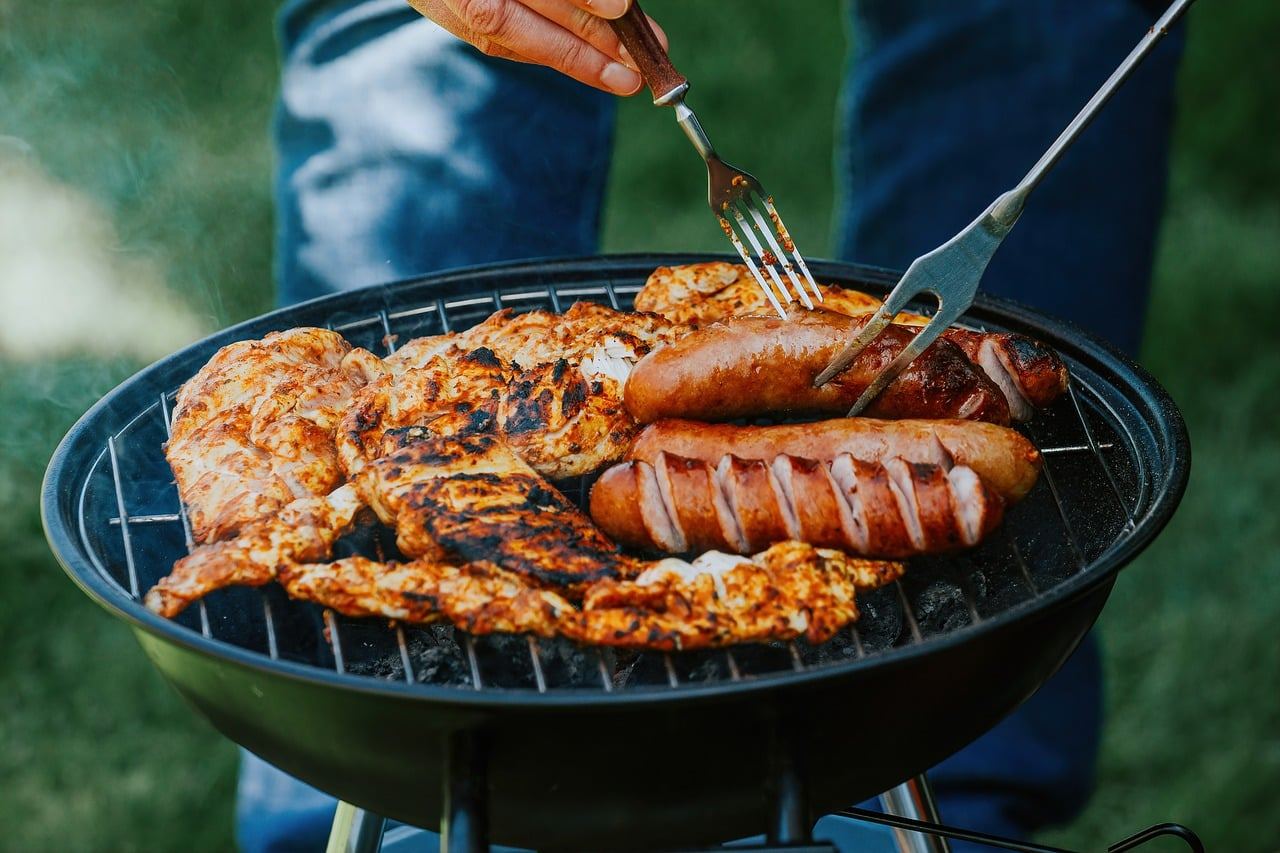
The seasoning is deliberately plain. Sunset describes a dry rub of salt, pepper and garlic salt, with no sauce on the meat.
The equipment matters as much as the rub. The grill is made of iron and usually has a hand crank that raises or lowers the meat over the coals, as Wikipedia describes.
Cooks often judge heat by hand rather than by thermometer. In The Takeout, butcher Tim Woodbury says grillers set the grate at what they call 5 seconds or 9 seconds, the count they can hold a hand over the fire.
Fat tells a cook as much as the clock does. According to The Takeout, Woodbury often just watches the fat dripping off thick cuts, looking for a good, even drip pattern, meaning the fat falls to the fire at the right pace.
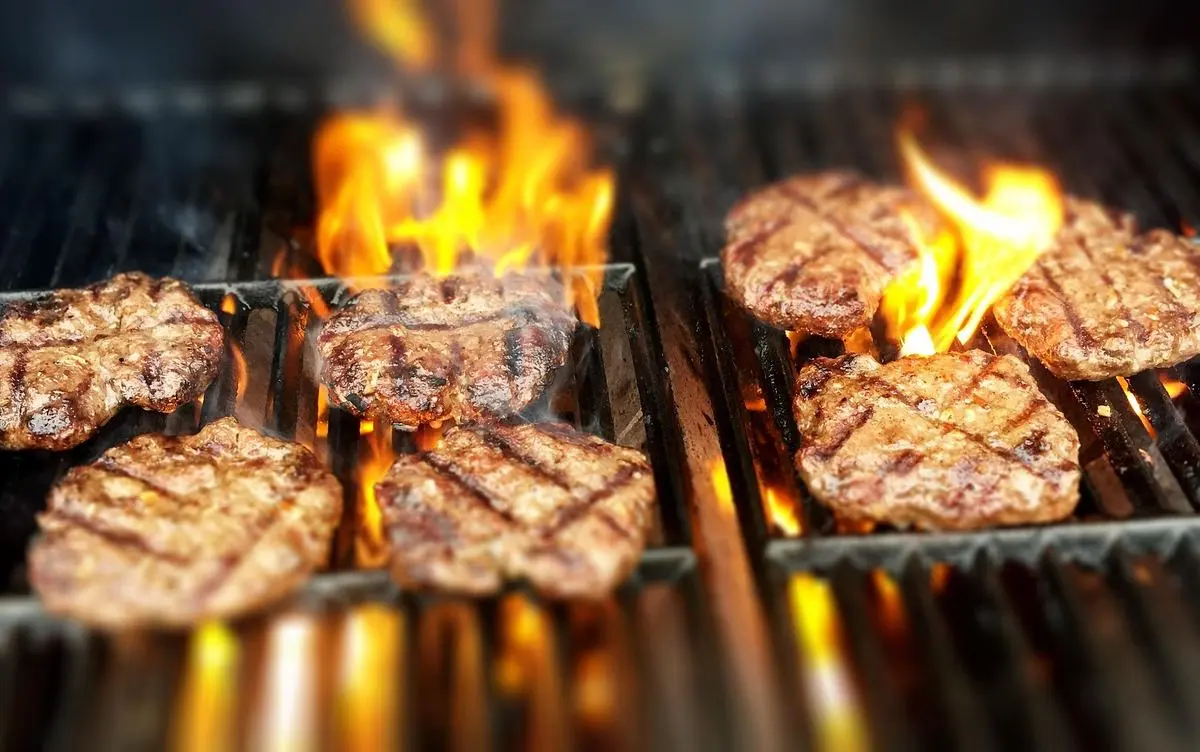
The aim is a quick, direct sear. Tasting Table says the meat goes directly atop the coals and cooks until medium-rare.
The wood is part of the local culture. The Takeout describes red oak as a wood indigenous to Western California, and says public parks from Santa Barbara to Paso Robles have these grills in their picnic areas. Self-respecting barbecuers, it adds, bring their own bundles of red oak instead of charcoal briquettes.
The traditional plate: beans, salsa, bread and salad
The meat is only part of the meal. Wikipedia lists the traditional accompaniments:
- Pinquito beans, small and pink.
- Fresh salsa.
- Tossed green salad.
- Grilled French bread dipped in sweet melted butter.
Many locals and well-known establishments also add Portuguese linguiça, a spicy sausage, to the lineup of meats. Pinquitos are a cross between a pink bean and a small white bean, and Betteravia Farms began growing them commercially in 1972, according to the same page.
Notice what is missing: barbecue sauce. The Takeout says not to expect a bottle at any traditional restaurant in the valley, because the sole condiment is fresh salsa.
If you want to cook the sides yourself, the santa barbara farmers market is one place to look for salad greens and salsa ingredients.
Why is it grilled rather than smoked?
Many people hear “barbecue” and picture a smoker. Afar quotes caterer Brian Appiano saying most other regions use a smoker with indirect heat, while Santa Maria-style pits cook directly over the coals.
That changes the flavor. Barbecue Bible says the open pits give a light, delicately aromatic wood flavor, not the heavy smoke of the American South.
It is also a method more than a single cut. The Takeout says you may find chicken, pork ribs or even fresh halibut on the grates, though beef is the most common because cattle ranchers developed the style.
The older cut still has a following too. Barbecue Bible calls top block sirloin a flavorful loin cut that was skewered on long steel rods and spit roasted over the open fire.
Where can you taste it near Santa Barbara?
As of The Takeout’s February 12, 2020 article, Cold Spring Tavern in Santa Barbara, established in 1886 as a stagecoach stop, barbecues tri-tip on weekends. It names The Hitching Post II in Buellton as the spot featured in the movie Sideways.
The same piece says The Hitching Post in Casmalia dates to 1920, and that Jocko’s in Nipomo has served sirloin since 1925. Treat these as a starting list: menus, hours and ownership change, so confirm details with each venue before you go.
These places are named only as examples from that article, and this site has no affiliation with any of them. If you would rather eat your way through several kinds of dishes, planning a santa barbara food tour is another route.
Frequently asked questions
What cut is used for Santa Maria-style barbecue?
Show answer
Tri-tip is the usual choice today. Wikipedia says it became the meat of choice after its introduction in the 1950s, while the original cut was top sirloin.
Is there barbecue sauce?
Show answer
Not at traditional restaurants. The Takeout says the sole condiment is fresh salsa.
What wood is used?
Show answer
Native coast live oak, often called red oak. Wikipedia describes the meat being grilled slowly over its coals.
What are pinquito beans?
Show answer
They are a cross between a pink bean and a small white bean that grows well in the Santa Maria Valley, per Wikipedia.
Is it the same as smoked barbecue?
Show answer
No. Afar notes that Santa Maria-style pits cook directly over the coals instead of using a smoker with indirect heat.